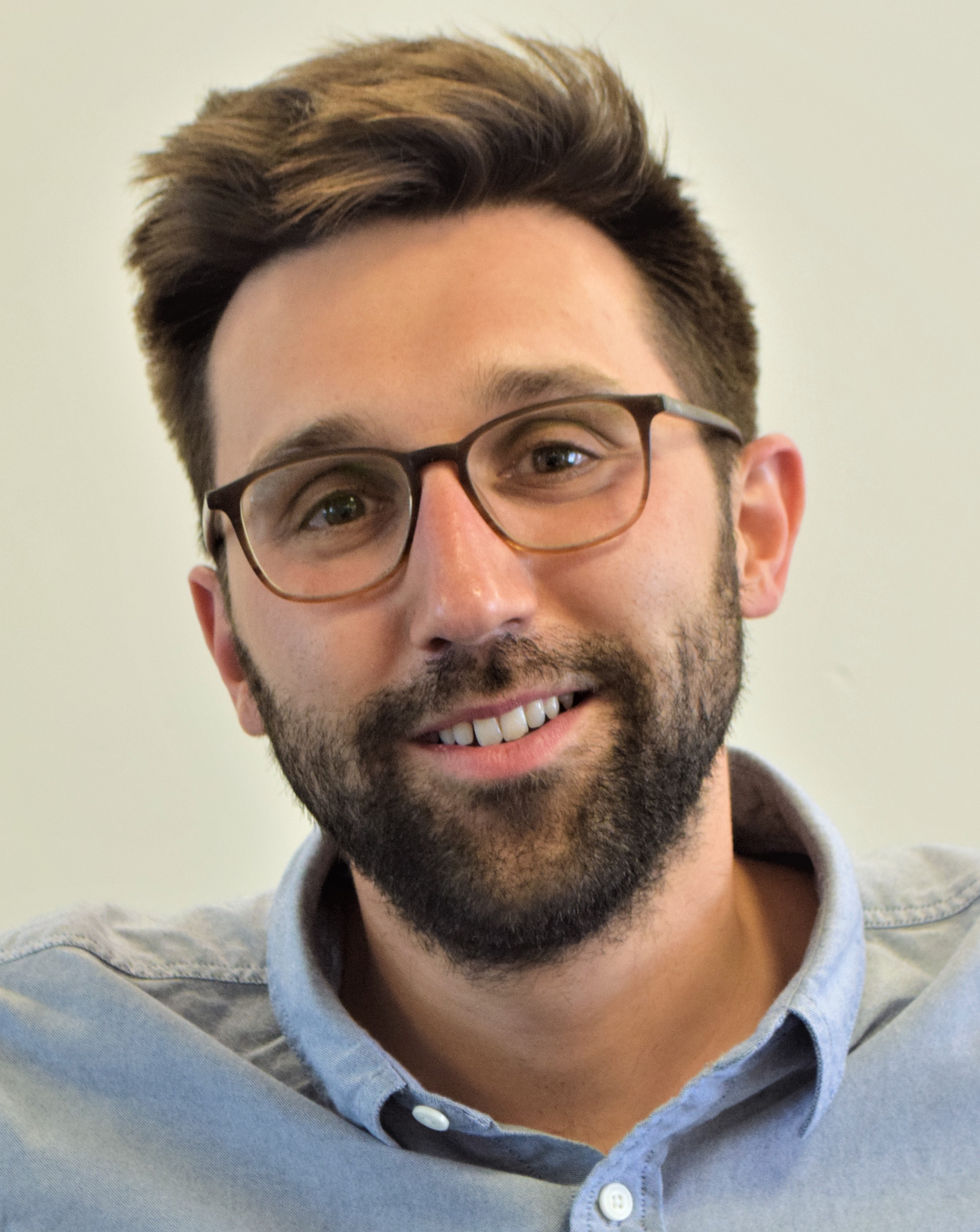
I am a research associate in the Department of Cognitive and Psychological Sciences at Brown University. I study how people flexibly adjust cognition and behavior in line with their goals. The core insight of my work is that cognitive abilities are not fixed. Rather, I take a dynamical view of cognition, in which people continuously adjust how they process information (e.g., how focused they are on the task at hand) and make decisions (e.g., rapidly but accurately, or slowly but carefully). In my work I explore how changing levels of motivation guide such adjustments, as well as the processes that support this type of cognitive flexibility. To do so, I develop formal theoretical models and test them using behavioral experiments, computational modeling, and model-based neuroimaging methods. I apply insights from this work to understand how and why cognition and motivation change in aging and psychopathology.
Cognitive dynamics that support and limit cognitive flexibility
Changes in motivation, task demands, or performance goals demand adjustments in cognitive control. Such adjustments move us through the space of possible control signals, allowing us to focus more when tasks are hard, but relax when they are routine. In my recent work I study how people navigate the space of control signals as their goals change. This work shows that people slowly move from their current control state to the state imposed by a new goal. Slow movement limits our ability to flexibly transition between control states and generates costs in environments that demand frequent control adjustments.
Recent work
Grahek, I., Leng, X., Fengler, A., & Shenhav, A. (2025). Slower transitions between control states lead to reductions in cognitive flexibility over the lifespan. bioRxiv. link
Grahek, I., Leng, X., Musslick, S., & Shenhav, A. (2025). Control adjustment costs limit goal flexibility: Empirical evidence and a theoretical account. Psychological Review. link
Neurocomputational mechanisms through which motivation guides cognition
What determines how we engage with our current goal? My work starts from the assumption that the cognitive resources we invest in a task depend on dynamically changing levels of motivation. I formalize this idea using normative models in which different components of motivation (e.g., value and controllability of an outcome) determine how people process information and select actions.
Recent work
Grahek, I., Karkada Ashok, A., Kikumoto, A., Serre, T., Frank, J.M. (2024). Reinforcement-Based Control of Information Processing in Recurrent Neural Networks Produces Optimal Speed-Accuracy Tradeoff. 2024 Conference on Cognitive Computational Neuroscience. link
Grahek, I., Frömer, R., Prater Fahey, M., & Shenhav, A. (2023). Learning when effort matters: neural dynamics underlying updating and adaptation to changes in performance efficacy. Cerebral Cortex, 33(5), 2395–2411. link